


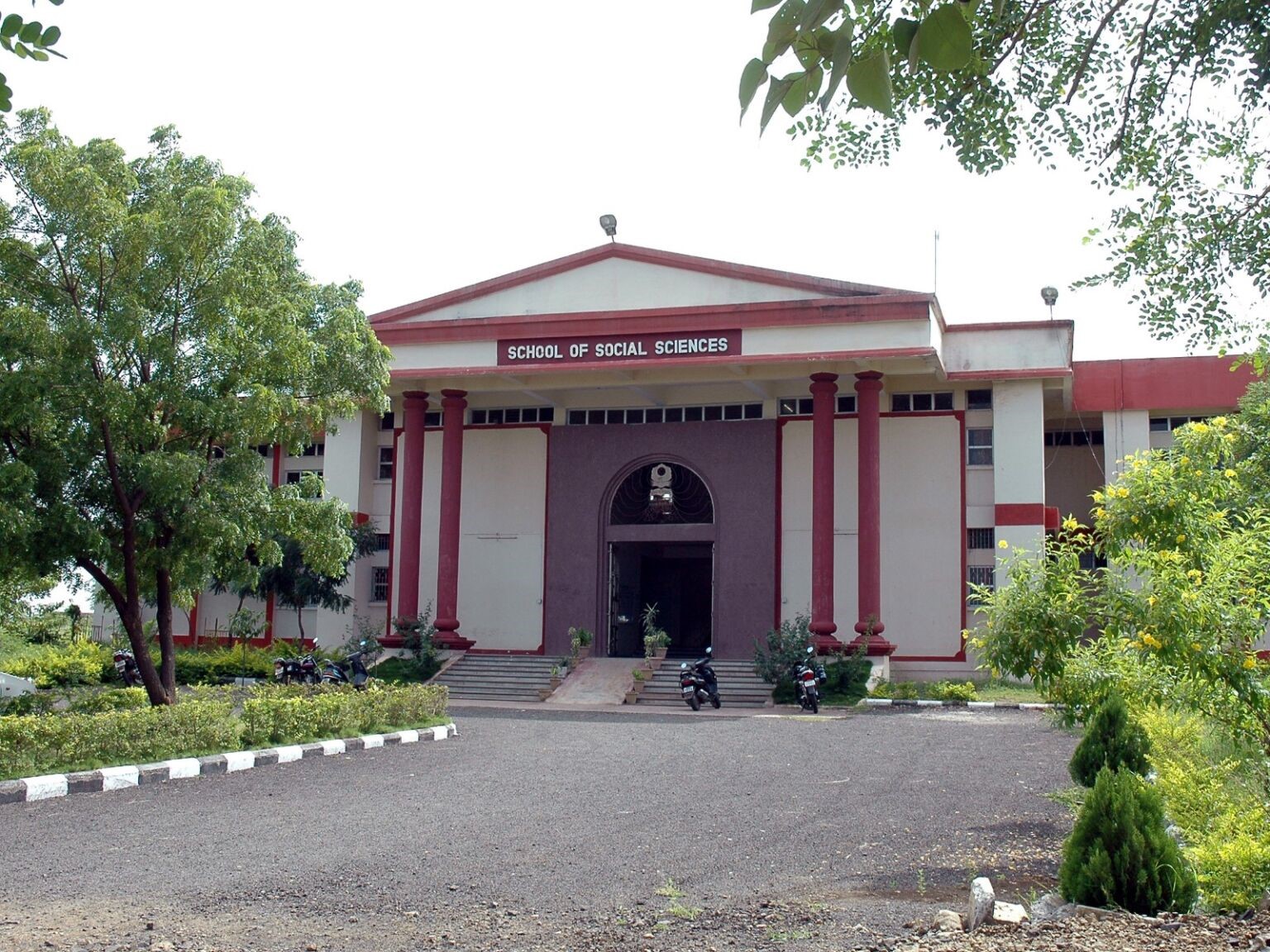
Welcome to the School of Social Sciences. It is an absolute pleasure to welcome all of our stakeholders—our brilliant students, dedicated parents, academic peers, and esteemed partners—to this orientation.
Since the very inception of our university, this school has stood as a cornerstone of academic excellence and intellectual rigor. We have grown with this institution, and today, we stand as a premier hub where the complexities of human society are studied, understood, and channelled toward positive change. What truly defines us is our highly qualified, deeply committed teaching faculty. These are veteran educators and active researchers who bring vast knowledge from their own high-impact publications and prestigious completed research projects straight into the classroom.
At the heart of our school is its deeply interdisciplinary nature. We recognize that modern societal and economic challenges cannot be solved in silos, which is why we break down traditional academic walls. This collaborative philosophy directly shapes our curriculum, which is fully aligned with the National Education Policy. This modern framework ensures that our students receive a holistic, flexible, and forward-looking education. This dynamic approach is vividly reflected in our diverse postgraduate programs, where we proudly run specialized courses including M.A. Applied Economics, M.A. Sociology, M.A. Human Rights, Master of Social Work (MSW), and M.A. Psychology.
We firmly believe that a great mind needs a great environment to thrive. To support your academic journey, the school is equipped with a state-of-the-art smart seminar hall for national and international seminars, high-tech computer labs, and seamless campus-wide Wi-Fi connectivity. We also deeply care about your well-being outside the classroom, providing safe, secure, and comfortable hostel facilities for both boys and girls.
However, education here goes far beyond textbooks. Our core focus is on providing a profound balance of deep theoretical knowledge and real-world practical understanding. We don’t just teach theory; we embed field work, hands-on workshops, on-the-job training, and intensive block placements directly into our syllabus. Our vibrant campus life is packed with outreach activities, cultural programs, competitions, study tours, and specialized training programs that build your character and your portfolio. We also extend this ecosystem externally through formal MOUs with leading hospitals and prominent NGOs, alongside active research collaborations with apex government bodies like the ICSSR, NCW, UGC, and NHRC.
The ultimate proof of our impact is the incredible success of our students. We consistently celebrate a significant success rate in SET, NET, and other competitive examinations. Year after year, a vast number of our scholars clear these rigorous tests and are placed as Assistant Professors in esteemed universities and colleges across the nation. For those leaning toward administrative and social sectors, our placement cell facilitates significant careers, launching graduates as officers and professional staff in government offices and leading NGOs. Finally, you are never alone on this journey. You are backed by a strong, active alumni connect—a network of past graduates who are already out there shaping the world and are eager to mentor and open doors for you.
As you step into this school, you are not just entering a department; you are joining a legacy. I invite you to engage deeply, challenge assumptions, and work with us to shape a better future.
Thank you.
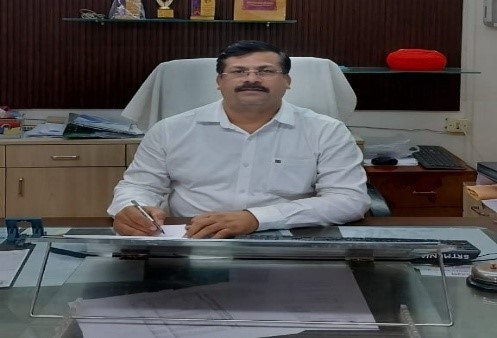
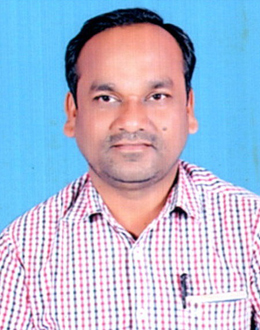
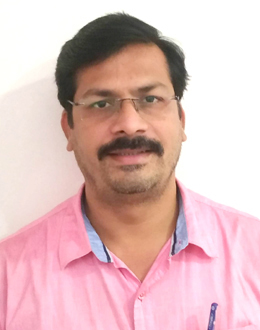
Dr. Pramod Pandurang Lonarkar
Professor & Director
School of Social Sciences,
Swami Ramanand Teerth Marathwada University,Nanded
School at a Glance:
80+ Research papers | 39+ NET / SET / GATE /other exam qualified (2022–26) | 28+ Books and Chapter | ₹43L+ Govt. research funding | 1 Consultancy |
49+ Ph.D. degrees awarded | 10 Conferences & workshops | 75+ Students placed (2022–26) | 1 Patent (2017–26) | 3+ MOUs |
Our journey
School is established in 1994, the School of Social Sciences has grown from a modest academic unit into a dynamic centre for teaching, research, and community engagement. Over the years, it has expanded its academic programmes in disciplines such as Social Work, Sociology, Applied Economics, Human Rights, and Psychology along with strengthening its research activities. All programmes syllabus is restructured under the National Education Policy (NEP) 2020 from the academic year 2023–24. What began as a modest academic initiative has gradually evolved into a dynamic centre for teaching, research, and community engagement in the region. In its formative years, the school focused on building a strong academic foundation with limited resources but a clear vision of quality education and field-based learning. Initially M.S.W. was the only program running under the school and over the time, it has expanded its academic programmes across disciplines such as Sociology, Applied Economics, Human Rights, Psychology and P.G. Diploma in Psychology while strengthening its research orientation and infrastructure. The school also takes pride in its distinguished faculty legacy. Many former faculty members have gone on to hold prestigious positions in universities, government institutions, and research organizations, contributing significantly to academic leadership and policy development.
What Makes Us Different?
- School is engaged in various interdisciplinary research project which has sanctioned by different funding agencies.
- The school have MOUs with NGOs and hospitals for intensive field-based orientation and internships for students.
- The school offers an M.A. in Applied Economics, designed to provide students with a strong foundation in economic theory along with practical applications in real-world policy and development issues.
- The school runs a postgraduate programme in Human Rights, one of the rare and specialized programmes in Maharashtra, highlighting its academic leadership in the field of human rights education.
- Every course includes mandatory credit-bearing practical courses in computer application in research such as MS-Excel, SPSS not optional add-ons, but embedded in the curriculum architecture.
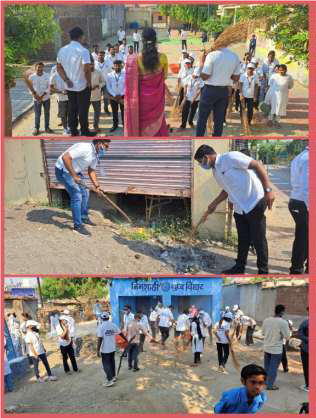
- Community engagement is a core part of the all programs in the school which enlighten students with real life situation and ground reality
Funding & Infrastructure
The School of Social Sciences has consistently strengthened its academic and research profile through various initiatives, infrastructure development, and student-centric practices. The school successfully completed the UGC SAP DRS-I programme (2011–2016) and has been supported under UGC SAP DRS-II since 2017-18 to 2022-23, reflecting its sustained academic excellence and research capabilities. Further school has derived the funds for minor and major research project from different governmental agencies such as ICSSR, NCW, MSCW, YESHADA, UGC and many more. Total government funding received since inception exceeds ₹ 43 lakhs.
In terms of infrastructure, the school is equipped with a separate computer lab with broadband internet, smart board, Projector in classroom, a smart seminar hall with AC for academic activities, and a well-maintained library. Each postgraduate programme includes a compulsory paper on Research Methodology, ensuring the development of research and analytical skills among students. We have statistical package of social sciences (SPSS) to equipe analytical skill of students.
Curriculum & Pedagogy
The School of Social Sciences at Swami Ramanand Teerth Marathwada University has restructured its curriculum and pedagogy in line with the National Education Policy 2020, emphasizing multidisciplinary, flexible, and skill-based education. The curriculum follows the provisions for multiple entry and exits and the Academic Bank of Credits, enabling flexibility and lifelong learning. It integrates disciplines such as Sociology, Applied Economics, Human Rights, Psychology, and Social Work.
The pedagogical approach is student-centred and focuses on experiential learning through lectures, discussions, seminars, presentations, and project-based activities supported by ICT and blended learning. Fieldwork, internships and community engagement are key components, helping students apply and contribute theoretical knowledge to real-life situations. Research orientation is promoted through research methodology, field work, field survey, On Job Training, block placement and dissertation work.
The curriculum also emphasizes skill development, including communication, analytical thinking, and teamwork, enhancing employability. Continuous and comprehensive evaluation through assignments, presentations, and field reports replaces rote learning. Outreach activities, village camp, study tours play vital role in shaping students understanding in the concerned discipline. Value-based education, including ethics, social justice, gender sensitivity, and environmental awareness, is also integrated. Overall, it aims to develop skilled, responsible, and competent post graduates.
Research
The faculty of the School of Social Sciences at Swami Ramanand Teerth Marathwada University possess diverse research specializations that contribute significantly to academic excellence and regional development. The major research thrust areas of the school include Financial Economics, Tribal Issues, Agrarian Issues, Rural Development, Gender Issues, Human Rights, Community Health, Mental Health, Child Issues, Environmental Issues, Constitution and Rights. These areas reflect the focus on addressing contemporary social challenges, particularly in the Marathwada region. Faculty members are actively engaged in interdisciplinary research combining sociology, economics, and social work perspectives.
The research guides in the school supervise M.Phil. and Ph.D. scholars in areas such as social work, sociology, human rights, and economics, thereby promoting advanced research culture. The faculty also undertake research projects funded by the different funding agencies. Also, Faculty have published over 80+ research papers in reputed indexed journals.
Student Outcomes
The school has a strong success rate in NET, SET, GATE, PET and Competitive examinations. During last five years over 39+ students have been succeeded in these examinations. Recently more than 75 graduates have secured placements in educational institutions, government departments, and the private sector with the highest package per annum. Over 90 students have progressed to Ph.D.
Vision
The School of Social Sciences at Swami Ramanand Teerth Marathwada University aspires to be a centre of excellence in inclusive and multidisciplinary education and research, fostering critical thinking, innovation, ethical values, and social responsibility, in alignment with the National Education Policy 2020, to promote equity, sustainable development, and societal transformation.
Mission
- To provide quality, multidisciplinary education in social sciences through flexible and learner-centric approaches.
- To promote research and innovation addressing local, regional, and global social issues.
- To develop critical thinking, analytical skills, and ethical values among students.
- To encourage community engagement, social responsibility, and inclusiveness.
- To enhance employability, skill development, and lifelong learning in accordance with NEP 2020.
- Strive to build a society that is not only aware of its rights but also understands and fulfil it’s responsibilities
Programme Objectives: Master in Social Work (M.S.W.):
- It seeks to provide the participants the knowledge, skills and information in the field of social, psychological, economic, culture and development through a participatory and an interdisciplinary approach.
- Social work profession addresses the barriers, inequities and injustices that exist in society. Its mission is to enhance people’s capacity to function in harmony with nature, fellow human beings and self to realize integration.
- To provide education and training in social work to those desirous of making a career in social work practice.
- Initiate and support action for social responsibility, redistribution of resources and facilitation of problem solving and conflict resolution, with a focus on sustainable development, social justice, gender justice and equity.
- Demonstrate an understanding and appreciation for human diversity, to engage in non-discriminatory culturally sensitive practice that seeks social and economic justice for clients, without regard to age, class, caste, culture, disability, ethnicity, family structure, gender, marital status, national origin, race, religion, and sexual orientation.
- Use appropriate supervision and consultation to conduct research and disseminate research findings that contribute to enhancement of students’ personal and professional development.
Programme Objectives — M.A. Applied Economics
In keeping with the reforms in the economic system and the market structure, this Programme provides in depth knowledge in the subject matter of economics. Not only understanding of theories and principles of economics but also to apply the principles and theories of economics in practical situations. This is useful in today’s globalised economic environment. Similarly, there is importance for industry-academic interaction. Applied Economics Programme makes much of all students to learn in detail crucial concepts, current national and international events, policy of government, budget, tools and techniques of econometrics for forecasting. Thus, whatever contents are taught by us, on that basis, students are given to an assignment practically in society through field work, mini project, case studies etc. In this regard, some of the subjects having huge demand in job market like banking and finance, foreign trade and international finance, computer application in economic analysis with practical training, statistical, mathematical and econometrical tools, stock market transactions, taxation. This course uses to student for planning and schedule of various works or projects, making efficient use of computers in data analysis and also use of internet to manipulate text and data, review of literature.
Programme Objectives — M.A. Sociology
- The Post Graduate Programme in Sociology is designed to provide advanced sociological knowledge, perspectives and skills to wide cross sections of the learners.
- This course is designed to provide basic and advanced theoretical as well as methodological knowledge of sociology for application.
- To enhance the scientific knowledge and attitude about the society. also to enhance the skills, capabilities and employment opportunities of the students in educational, research institutions and NGOs.
- To develop and in-built the capacity of the students to communicate effectively and use of sociological knowledge for better society.
- It seeks to provide the participants the knowledge, skills and information in the field of social, gender, power, sexuality, caste, class, culture and development through critical and reflexive participatory and an interdisciplinary approach.
- Sociology Understand power, politics, culture and human structures and Critical and reflexive knowledge production and understanding about human history.
Programme Objectives — M.A. Human Rights
- The Post Graduate Programme in Human Right is designed to provide advanced philosophical and theoretical knowledge, perspectives and skills to wide cross sections of the learners.
- This course has heavy demand in the field of competitive exams such as MPSC/ UPSC/ Social Welfare Departments. Therefore, course provides lot of opportunities to the learners.
- This course is designed to provide basic and advanced right based Research approaches to the learners.
- To enhance the scientific knowledge and attitude about the human behavior, social-cultural traditional and customs also to enhance the skills, capabilities and employment opportunities of the students in educational, research institutions and NGOs.
- To develop and in-built the capacity of the students to communicate effectively and use of theoretical, practical and field based insights or knowledge for better application of knowledge in the field and personal life also.
- It seeks to provide the participants the knowledge, skills and information in the field of social, gender, power, sexuality, caste, class, culture and development through critical and reflexive participatory and an interdisciplinary approach.
- The Course PG in Human Rights would help to Understand the various dimensions of power, politics, culture and human structures and Critical and reflexive knowledge production and understanding about human history.
Programme Objectives — M.A. Psychology
- To develop cognitive psychology principles to real world situation among the students.
- To build the professional relationship and network through psychological practicum.
- To study the various types and experiences of stress including distress, overload, anticipatory, underload, anticipatory, current and residual stress responses.
- To demonstrate comprehensive knowledge of the principles, procedures and ethical issues involved in psychological assessment, including planning, data collection, data processing and communication of assessment findings.
- To Applying effective verbal and non-verbal communication skill, diagnostic interviewing strategies, and developmentally appropriate interviewing techniques while assessing children adolescents and adults.
School Advisory Board
The school’s academic and strategic direction is guided by a distinguished Advisory Board comprising eminent social scientists from different reputed Universities and institutes such as Prof.Naresh Bodhke GIPE Pune, Prof.Sampat Kale, TISS, Tuljapur, Dr. Suresh Maind, University of Mumbai, Prof.Gangabhushan Molankan Silchar University Assam and Dr. Subhash Patil, SNDT Mumbai. This diverse board ensures the school’s curriculum, research directions, and student development programmes remain aligned with both the highest academic standards and the evolving demands of the society.
Postgraduate Programmes (NEP 2020)
Programme | Duration | Intake | NEP Status | Syllabus link |
M.S.W. | 2 Years (4 Sems) | 40 | Implemented 2023–24, revised 2024–25 | https://srtmun.ac.in/wp-content/uploads/2025/03/MSWCampusSubCampuswef202324.pdf https://srtmun.ac.in/wp-content/uploads/2025/03/MSWSecondYearCampusnSubCampus202425on13092024.pdf |
M.A. Applied Economics | 2 Years (4 Sems) | 30 | Implemented 2023–24, revised 2024–25 | |
M.A. Sociology | 2 Years (4 Sems) | 30 | Implemented 2023–24, revised 2024–25 | https://srtmun.ac.in/wp-content/uploads/2025/03/MASociologyCampusSecondYear202425on14082024.pdf |
M.A. Human Right | 2 Years (4 Sems) | 20 | Implemented 2023–24, revised 2024–25 | |
M.A. Psychology | 2 Years (4 Sems) | 40 | Implemented 2024–25 | – |
P.G. Diploma in Psychology | 1 Year | 20 | Implemented 2026-27 | – |
Research Degrees:
- Ph.D. in Social Work
- Ph.D. in Sociology
- Ph.D. in Applied Economics
- Ph.D. in Human Rights
Skill Based Courses:
Sr.No. | Course | Title of Paper |
01. | M.A. Applied Economics | Capital Market, Basic Econometrics, Advanced Econometrics, Statistical Method, Fundamental of MS-Excel and SPSS. |
02. | M.S.W. | Field Work, SWOT Analysis and identification of self, Working with individual (with group and community etc), Medical and Psychiatric Social Work / Labour Welfare and personal management, Village Camp, Study Tour, Industry Study, Individual Study, NGO Study. |
03. | M.A. Psychology | Foundation of Behavioural Research and Statistics, Research Methodology, Practical. |
04. | M.A. Human Rights | Applications of Research Skill, Field Survey Application of Computer in Social Sciences |
05. | M.A. Sociology | Applications of Research Skill, Field Survey, Application of Computer in Social Sciences |
Admissions
Eligibility Criteria
Course | Eligibility |
M.S. W | Any Graduation |
M.A. Applied Economics | Graduation with economics, statistics, Mathematical Economics |
M.A. Sociology | Any Graduation |
M.A. Human Rights | Any Graduation |
M.A. Psychology | Any Graduation |
P.G. Diploma in Psychology | Any Graduation |
Seat Distribution
Category | Percentage |
SRTMUN students / students from SRTMUN-affiliated colleges | 70% |
Students from other Maharashtra universities | 30% |
Students from other states in India (supernumerary — over and above quota) | 20% additional |
International / foreign students (supernumerary — over and above quota) | 15% additional |
Fee Structure (approx.):
As decided by the university time to time.
Note: Check the university website for current schedule. Link to prospectus
Our faculty brings a blend of deep theoretical expertise and cutting-edge computational skills, while simultaneously leading the university’s governance and quality assurance processes.
Faculty Profiles
Faculty Name | Designation | Specialization |
Dr. Pramod P. Lonarkar | Professor & Director | International Economics, Econometrics, |
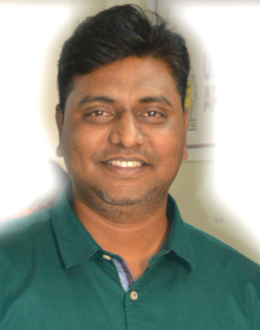
Dr. Nandkumar B. Bodhgire | Professor | Financial Economics, Development Economics |
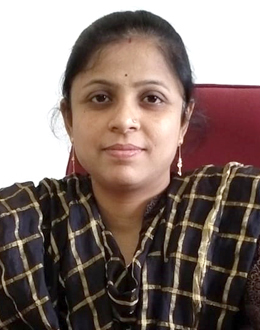
Dr. Shalinee U. Kadam | Associate Professor | Gender Economics, Agriculture Economics. |
Dr. Baburao S. Jadhav | Assistant Professor | Tribal Study, Environment and Gender Studies. |
University-Level Administrative Leadership
Our faculties are involved in academic and administrative leadership. The details are as follows: |
Administrative Roles — Faculty-wise
Faculty | Role | Institution | Period |
Dr.P.P. Lonarkar | Director, School of Social Sciences | SRTMUN | 2025–26 to present |
Member – BoS Economics | SRTMUN | 2021–22 to present | |
Member -Faculty of Humanities | SRTMUN | 2021–22 to present | |
Member -Board of Life Long Learning and Extension | SRTMUN | 2023-24 to present | |
Head -Department of Economics | SRTMUN | 2021–22 to present | |
School Coordinator- SWAYAM-NPTEL Coordinator Committee | SRTMUN | 2019-20 to present | |
Dr.N.B. Bodhgire | Warden of Boys Hostel | SRTMUN | 2020-21 to present |
School Co-ordinator-Training &Placement Officer | SRTMUN | 2023-24 to present | |
School Co-ordinator – LMS | SRTMUN | 2024-25 to present | |
Member – BOS in Human Rights | SRTMUN | 2023-24 to present | |
Member -IQAC Committee | SRTMUN | 2023-24 to present | |
Dr. Shalinee Kadam | Head of the Women’s Studies Centre | SRTMUN | 2014-15 to present |
Chairman — BoS Women’s Studies | SRTMUN | 2022-23 to present | |
Member — BoS of Economics | SRTMUN | 2022-23 to present | |
Senate Member | SRTMUN | 2022–23 to present | |
Member -Internal Complain Committee | SRTMUN | 2022-23 to present | |
Advisory Member -Day Care Centre | SRTMUN | 2018-19 to present | |
Dr.B.S. Jadhav | Chairman — BoS Human Rights | SRTMUN | 2022-23 to present |
Member — BoS of Sociology | SRTMUN | 2022-23 to present |
Distinguished Faculty Recognitions
Faculty | Award / Recognition | Year |
Dr.P.P.Lonarkar | प्रा.सो. अरुणा रारावीकर स्मृती आर्थिक लेख प्रथम पुरस्कार व सन्मानपत्र – मराठी अर्थशास्त्र परिषद | 2019-20 |
“Amartya Sen Award and Sanmanpatra” in Marathi Arthashastra Parishad | 2018-19 | |
Dr. Shalinee Kadam | Best Research Paper in Marathwada Arthashastra Parishad | 2024-25 |
Dr.B.S. Jadhav | Best Research Paper in Marathi Samajshastra Parishad | 2024-25 |
Dr. Anuradha Bhoite Best Published Research Paper Award in Marathi Samajsastrya Parishad, Maharashtra | 2022-23 | |
Dr. Babasaheb Best Research Paper in Marathi Samajsastra Parishad, Maharashtra | 2017-18 | |
Best Paper Presentation Award for the paper presentation in National Conference at NSB College Nanded. | 2014-15 |
Research Output
80+ Research papers (Scopus & WoS) | 12+ Research Project | 28+ Books and. book chapters | 1 Patent |
49+ Research Guidance | 86+ Invite Talk | 3+ NPTEL Marathi translations | 1 Consultancy |
Ph.D. Research Summary — Degrees Awarded
Our 49+ Ph.D. scholars have made significant contributions across diverse research domains:
Research Domain | Count | Thesis Areas |
Social Work | 25+ Awarded | Labour Law, Gender, Microcredit, NGO, Rural Development, Health |
Economics | 6 Awarded 15 are Ongoing | Financial Economics, Developmental Economics, Health Economics, Gender Economics, Agriculture Economics |
Sociology | 16 Awarded 2 are Ongoing | Gender, Tribal, Social Movement, Farmer Suicide, Dalit Studies, NGO and Development. |
Human Rights | 2 Awarded | Child Rights, Human Rights |
[Web Coordinator: Link to complete Ph.D. list with thesis titles, guides, and years. Also link to SRTMUN Shodhganga Repository for thesis access.
https://shodhganga.inflibnet.ac.in/handle/10603/5404
Major Funded Projects
Name of the Faculty As Principal Investigator | Project | Agency | Amount |
Year | Status | |
Dr.P.P.Lonarkar | Health Hazards and Social Vulnerabilities of Sugarcane Cutter Women Migrant: An Exploration from Maharashtra and Karanataka | National Commission for Women, Delhi | Rs.14,39,995/- | 2021 | Completed | |
Dr.N.B.Bodhgire | Mapping the Multidimensional Poverty Index of Tribal Women : A Special Reference to Kinwat Taluka. | Maharashtra State Commission for Women, Mumbai | Rs. 1,50,000/- | 2018 | Completed | |
A Comparative Study of Risky and Non-Risky Investment with special reference to Nanded City | Swami Ramanand Teerth Marathwada University, Nanded | Rs. 50,000/- | 2011 | Completed | ||
Dr. Shalinee U.Kadam | A Study of Socio-economic Status of Women Workers in Agriculture: Special Reference to Backward District of Maharashtra | MSCW | Rs. 1,00,000/- | 2018 | Completed | |
Problem and Prospects of Empowerment among Tribal Women: A Study in Hingoli District of Maharashtra | SRTMUN | Rs. 65,000/- | 2019 | Completed | ||
Dr.B.S.Jadhav | ICSSR-Multi-Disciplinary Research Studies on Decolonizing the Discourse on PVTGs: Cultural Heritage and Indigenous Knowledge System of the Kolam Tribes in Maharashtra | ICSSR, New Delhi | Rs.10,00,000 | 2025 | Ongoing | |
Exploring Indigenous Knowledge Based on Local Resources: A Study of Gond, Kolam and Pardhan in Gondawna region in Maharashtra | ICSSR, New Delhi | Rs.12,00,000/ | 2024 | Ongoing | ||
Development of Particularly Vulnerable Tribe: A Study of Kolam Tribe in Nanded District | S.R.T.M, University Nanded, Maharashtra | Rs. 100000/- | 2022 | Completed | ||
Environmental Degradation and Its impacts on tribal women | S.R.T.M, University Nanded, Maharashtra | Rs. 101000/- | 2018 | Completed | ||
Exploring Hurdles in Tribal Women Entrepreneurship | State Commission for Women, Maharashtra, Mumbai | Rs.50,000/- | 2020 | Completed | ||
Consultancy
Faculty | Project | Client | Revenue | Year |
Dr.N.B. Bodhgire | Jan Yojana Consultancy Services | Jan Yojana Consultancy Services contact no9766662421 | Rs.90,000/- | 2026-27 |
Patent
Faculty | Project | Patent No. | Year |
Dr.S.U.Kadam | AI- Powered Corporate Resource and Asset Monitoring Device | 442400-001 | 2024-25 |
Books, Chapters, Translations & MOOCs
Type | Count | Publishers / Platforms |
Books Authored / Edited | 6+ | YCMOU, SRTMUN, |
Book Chapters | 20+ | Mumbai University, SRTMUN, YCMOU, |
SWAYAM/NPTEL Translations (Marathi) | 3+ | NPTEL IIT Madras — English Language for Competitive Exams, Stress Management, Patent Drafting for Beginners |
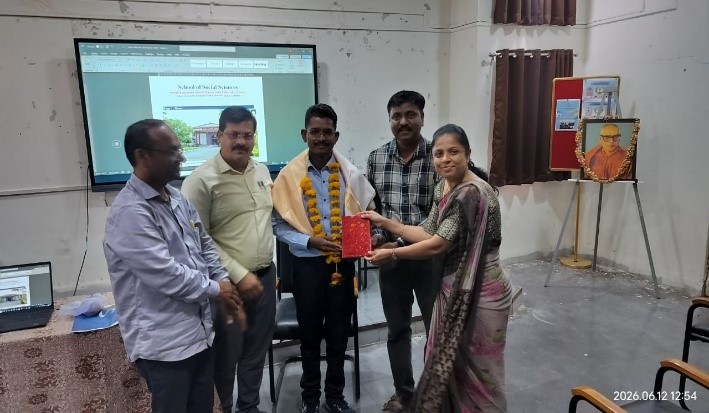
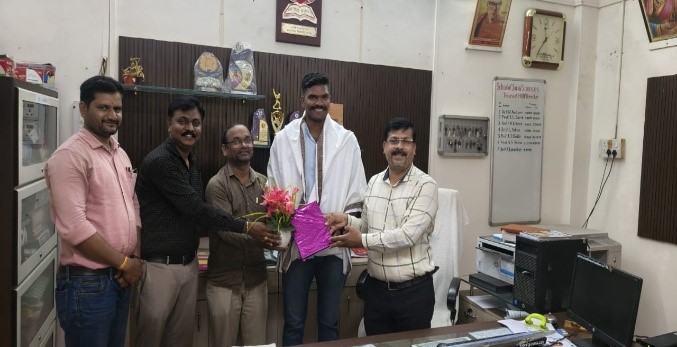
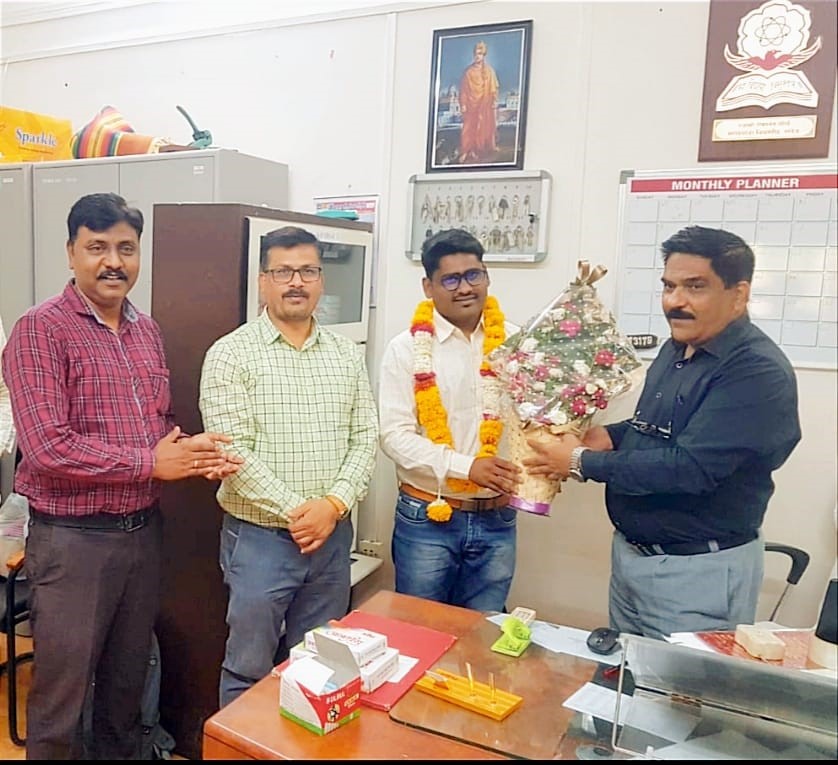
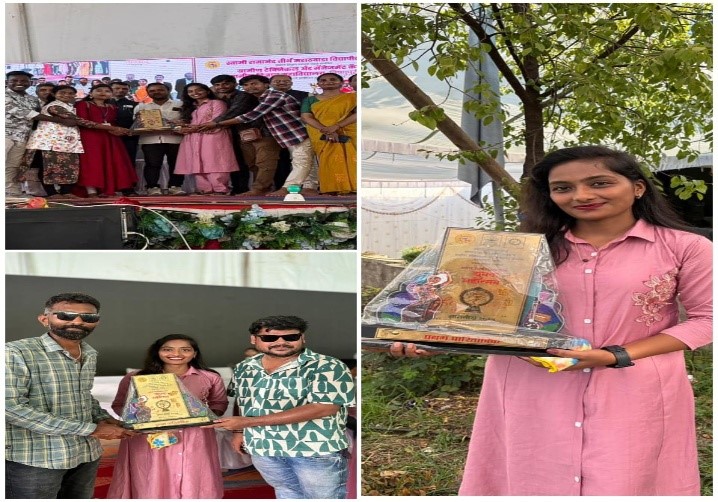
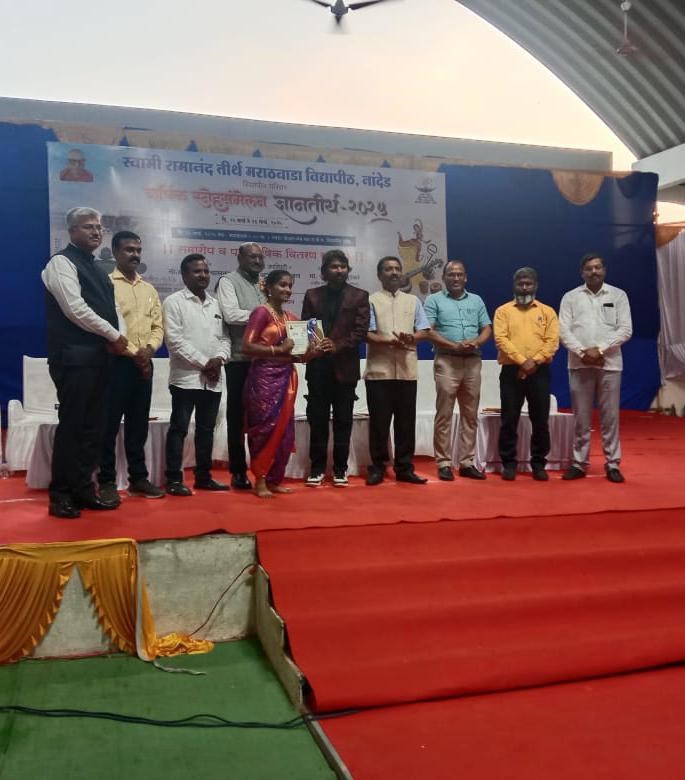
Highlights of some major achievements of the School of Social Sciences:
10.1 Government Grants & Funding
The School of Social Sciences of SRTM University ,Nanded has received financial support from various government agencies such as UGC Special Assistance Program (SAP-DRS-I (2011-2016)) and UGC Special Assistance Program (SAP-DRS-II (2018-2023)),Project of NCW,New Delhi ,Project of MSCW, Mumbai ,YASHADA ,Pune, ICSSR ,New Delhi ,RUSA and Many more for academic development ,research ,infrastructure and extension activities. Total government funding since inception: More than ₹12 lakhs.
10.2 International Conferences/Seminar /Workshop/Training Program /Invite Talk Hosted:
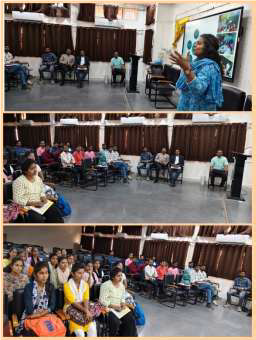
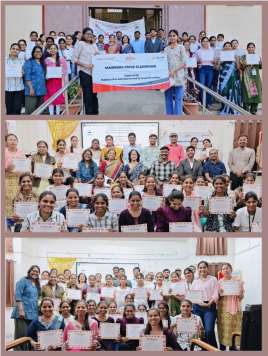
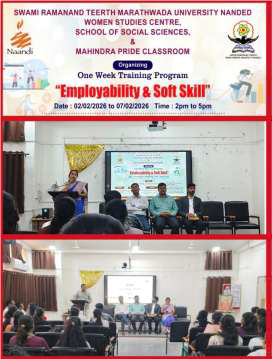
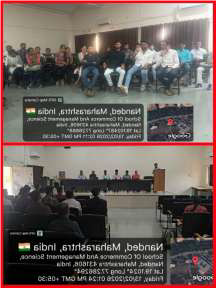
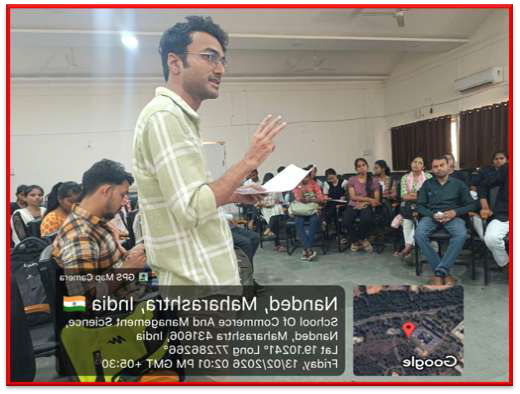
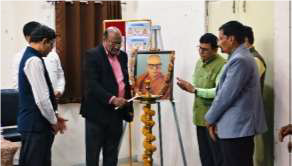
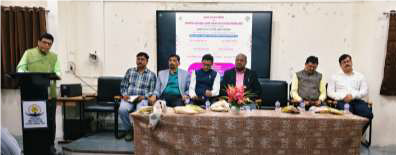
The School of Social Sciences of SRTU University (SRTMU), Nanded, regularly organizes International, National and State Level Conferences, Seminars, Workshops, Training Program and Guest Lectures to promote academic excellence and research. These programmes cover important themes such as Gender Studies, Rural Development, Agrarian Issues, Research Methodology, Disaster Management and Public Policies. They provide a platform for interaction among academicians, researchers, students and policymakers, enhancing research skills, knowledge sharing and community engagement. Through these activities, the school contributes significantly to quality higher education and reginal development.
10.3 Digital Innovation — State-wide Impact
The faculty of the school have also contributed to translate of NPTL (National Programme on Technology Enhanced Learning), IIT, Chennai courses such as English Language for Competitive Exams, Stress Management, Patent Drafting for Beginners into regional language (Marathi) making quality online educational resources more accessible to students. This initiative supports multilingual learning and aligns with the objectives of NEP 2020.
11.1 Notable Alumni in Academic & Professional Positions:
11.2 Alumni Contributions
₹2,66,300 | Total Alumni Contribution (2020–21 to 2024–25) 411+ alumni have contributed financially to support school activities and student welfare |
Recent Major Events (2022–26)
Event | Funded By | Participants | Date |
“Whither Indian Agriculture? : Issues and Challenges in Marathwada” | UGC-(SAP) DRS Stage II | 200 | 2019-20 |
“Contesting Violence: Literature, Culture, and Society” | SRTM, University, Nanded | 100 | 2019-20 |
A Two-Day National Seminar on Rural Livelihoods and Sustainability of Farmers | University Grand Commission Special Assistance Programme (SAP DRS-II) | 170 | 2019-20 |
Human Rights and Duties Education | NHRC,New Delhi | 90 | 2018-19 |
कामाच्या ठिकाणी महिलांचा लैंगिक छळ(प्रतिबंध ,मनाई,आणि निवारण ) अधिनियम २०१३ या कायद्याबद्दल जनजागृती | महाराष्ट्र राज्य महिला आयोग, मुंबई | 370 | 2016-17 |
“Research Methodology Training Course” | ICSSR, Mumbai | 80 | 2014-15 |
“Dynamics of Agrarian Relations and Marginalization of Farmers in Contemporary India” | UGC-(SAP) DRS Stage I | 125 | 2013-14 |
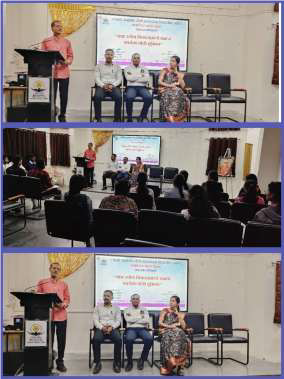
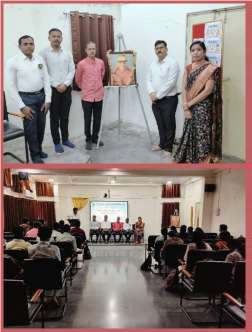
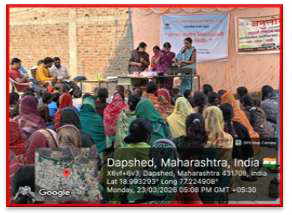
Facilities and Infrastructure of the School:
Facility | Details |
Computer Labs (1) and Internet | For P.G. students — used for all practical courses each semester and also have the WI-FI connectivity for academic and research work. |
Licensed Software | IBM SPSS v 20 |
Library | School has separate library including around 500 books of Human Rights, Sociology and Social Work. |
Classrooms | Well-equipped, technology-enabled teaching spaces with smart board and Projector. |
Research Scholars Labs (1) | Individual computing for Ph.D. scholars; dedicated workstations with internet access |
Seminar Hall | Facilities for seminars,workshos,conferences and guest lecture. |
Student Resources & Support
- Hostel Facilities: Separate Boys’ and Girls’ hostels on campus. Dr.N.B.Bodhgire currently serves as Boys’ Hostel Warden. [Link to Hostel Application Portal on SRTMUN website]
- Scholarships: Guidance provided for State/Central SC/ST/OBC/EWS, Minority, and Merit scholarships. [Link: www.scholarships.gov.in]
- Grievance Redressal: Strict adherence to UGC regulations. [Link to University Grievance Portal]
- NET/SET/GATE Coaching: Integrated into academic calendar; free for all enrolled M.A. students throughout the year.
- Earn and learn scheme for Students.
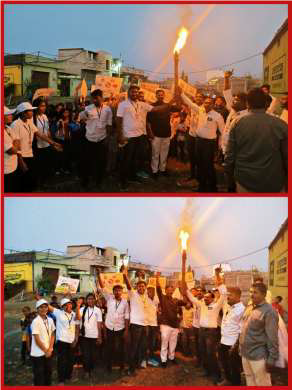
- Sharad Pawar Fellowship.
- Internal Complain committee at school level.
National Research & Training Programmes
Organization | Purpose | Official Links |
UGC-University Grants Commission | Higher education scheme, fellowships notices. | |
SWAYAM | Free Online courses from Indian Universities. | |
NPTL | Online Certification Courses | |
ICSSR-Indian Counsil of Social Sciences Research | Research grants, fellowships, training programmes. | |
NITI Ayog | Policy report and development research | |
Ministry of Education | National Education policies and initiatives | |
e-PG Pathshala | Free Post Graduates Learning Materials | |
INFLIBNET centre | Shodhganga, shoghgangotri and e-resources’ | |
National Digital Library of India (NDLI) | Free access to books thesis and research resources. |
Competitive Examinations
- CSIR-UGC NET: www.csirnet.nta.nic.in
- GATE Economics: www.gate2026.iitr.ac.in
- Maharashtra SET (MH-SET / SLET): www.setexam.unipune.ac.i
Online Learning & University Resources
- SWAYAM Online Courses: www.swayam.gov.in
- NPTEL Online Courses: www.nptel.ac.in
- SRTMUN Online Admission Portal: www.srtmunadm.samarth.edu.in
- University Website: www.srtmun.ac.in
Contact Information
School of Social Sciences (Code: 138) Director: Dr.Pramod Pandurang Lonarkar Address: Vishnupuri, Nanded – 431 606, Maharashtra, India Phone: 02462-215942 Director Email: School Email: [email protected] University Website: www.srtmun.ac.in | Admission Portal: www.srtmunadm.samarth.edu.in |
Social Media Handles
Connect with the School of Social Sciences on social media. Web coordinator to fill in or create official handles:
Platform | Handle / URL | Status | Notes |
SRTMUN Official Website | [ ] Update [ ] Live | Main school page — this document feeds it |
[Web Coordinator: Embed Google Maps showing school location within SRTMUN campus. Coordinates: approximately 19.1547° N, 77.3261° E (SRTMUN Vishnupuri campus, Nanded). Link all social media icons in the website footer and on the Contact page header.] |
Dr. Pramod Pandurang Lonarkar
Dr. Nandkumar Baburao Bodhgire
Dr. Shalini Uttamrao Kadam